Wednesday, June 3, 2009

The Aston Martin Lagonda


The Aston Martin Lagonda
The Aston Martin Lagonda was a luxury four-door sedan (saloon) built by Aston Martin of Newport Pagnell, England, between 1976 and 1989. 645 examples of this model were produced and the average selling price was £150,000. Aston Martin was about to go out of business in the mid-1970s and needed something to bring in some much-needed funds. Traditionally, Aston Martin had worked on 2+2 sports cars, but the Lagonda — the model being named after a grand sporting marque — was a four-door saloon with a brand new V8 engine. As soon as it was introduced, it drew in hundreds of deposits from potential customers, helping Aston Martin's cash reserves.

The car was designed by William Towns in an extreme interpretation of the classic 1970s "folded paper" style. It was as unconventional a design then as it is now. Car enthusiasts are fiercely divided on the car's aesthetic value. Throughout the history of the marque, these hand-built Lagondas were amongst the most expensive saloons in the world. The only other "production" cars to approach its lofty price tag were the Rolls-Royce Silver Spirit/Silver Spur, Bentley Mulsanne, and Maserati Quattroporte.

The Alfa Romeo MiTo


The Alfa Romeo MiTo
The Alfa Romeo MiTo (known internally as the type 955) is a three door sporty supermini officially introduced on 19 June 2008 in Castello Sforzesco in Milan, the international introduction was at British Motor Show in 2008. The car will be available in all major markets in stages from July. The three-door hatchback will feature front-wheel drive and will be sold to compete with the MINI and the upcoming Audi A1. Designed by Centro Stile Alfa Romeo, the design is believed to be inspired by the 8C Competizione.
The MiTo is built on Fiat/GM SCSS platform used on Fiat Grande Punto, also employed by the Opel/Vauxhall Corsa D. The car has new "Alfa DNA" system which allows driver to choose between three different driving settings; Dynamic, Normal and All-Weather, this setting controls the behaviour of engine, brakes, steering, suspension and gearbox. The MiTo has also LED tail lights and 250-litre (8.8 cu ft) boot space. The MiTo also features a Q2 electronic differential on the front wheels, which allows for faster and tighter cornering without loss of traction. The aggressiveness of the differential is linked to the DNA switch.

The Alfa Romeo Brera


The Alfa Romeo Brera
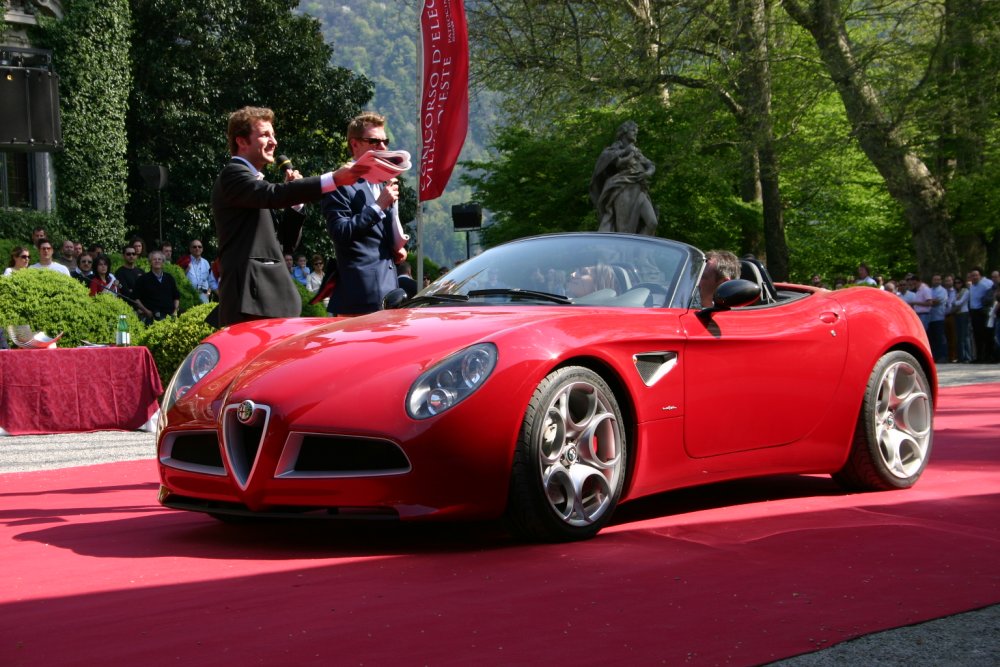
The Alfa Romeo Brera is a grand tourer produced by the Italian automaker Alfa Romeo since 2005. The Spider cabriolet has been produced since 2006. Both cars are manufactured by Pininfarina. The Brera originally appeared as a concept car at the 2002 Geneva Motor Show. It was designed by Giorgetto Giugiaro at Italdesign Giugiaro. The concept version was powered with Maserati V8 engine producing around 400 PS (395 hp/294 kW). The Brera was widely acclaimed, and production plans were subsequently announced for 2005.

The Alfa Romeo Brera was introduced in production form at the 2005 Geneva Motor Show. It maintained the original's exterior appearance almost exactly but on a much smaller scale, becoming a mid-size coupe on the GM/Fiat Premium platform (shared with the Alfa Romeo 159), and designed to replace the outgoing GTV. A convertible Spider version of the Brera was also announced, to be launched shortly after the coupe and to replace the existing GTV-based Spider.

Alfa Romeo Automobiles


Alfa Romeo Automobiles
Alfa Romeo Automobiles S.p.A. is an Italian automaker founded on June 24, 1910 in Milan. Alfa Romeo has been a part of the Fiat Group since 1986. The company was originally known as A.L.F.A., which is an acronym for Anonima Lombarda Fabbrica Automobili (translated: Lombard Automobile Factory, Public Company).

The company that became Alfa Romeo was founded as Società Anonima Italiana Darracq (SAID) in 1906 by the French automobile firm of Alexandre Darracq, with some Italian investors. One of them, Cavaliere Ugo Stella, an aristocrat from Milan, became chairman of the SAID in 1909. The firm's initial location was in Naples, but even before the construction of the planned factory had started, Darracq decided late 1906 that Milan would be a more suitable location and accordingly a tract of land was acquired in the Milan suburb of Portello, where a new factory of 6,700 square metres (8,000 sq yd) was erected. Late 1909, the Italian Darracq cars were selling slowly and Stella, with the other Italian co-investors, founded a new company named A.L.F.A. (Anonima Lombarda Fabbrica Automobili), initially still in partnership with Darracq. The first non-Darracq car produced by company was the 1910 24 HP, designed by Giuseppe Merosi, hired in 1909 for designing new cars more suitable to the Italian market. Merosi would go on to design a series of new A.L.F.A. cars, with more powerful engines (40-60 HP). A.L.F.A. also ventured into motor racing, drivers Franchini and Ronzoni competing in the 1911 Targa Florio with two 24 HP models. In 1914, an advanced Grand Prix car was designed and built, the GP1914 which featured a four cylinder, double overhead camshafts, four valves per cylinder and twin ignition. However, the onset of World War I halted automobile production at A.L.F.A. for three years.

The Peugeot 407 SW


The Peugeot 407 SW 2.2 HDI has a very good engine turbo of 170 hp, which enhances the dynamic qualities of this model. Like the rest of the range Peugeot 407 SW, has little space for the occupants of the rear seats and in the trunk.

This version of the Peugeot 407 SW diesel engine with 170 hp is more pleasant than usual because it has strength in circumstances where other scarce diesel engines. It does not cost exit from stationary, you can drive in city marches in maintaining good response and long-almost the least-can reach a high regime with ease. These advantages are most noticeable in city outskirts and slow roads that highway.

Monday, June 1, 2009

Fiat Stilo Abarth


Fiat Stilo Abarth

Abarth Pictures


Abarth Pictures
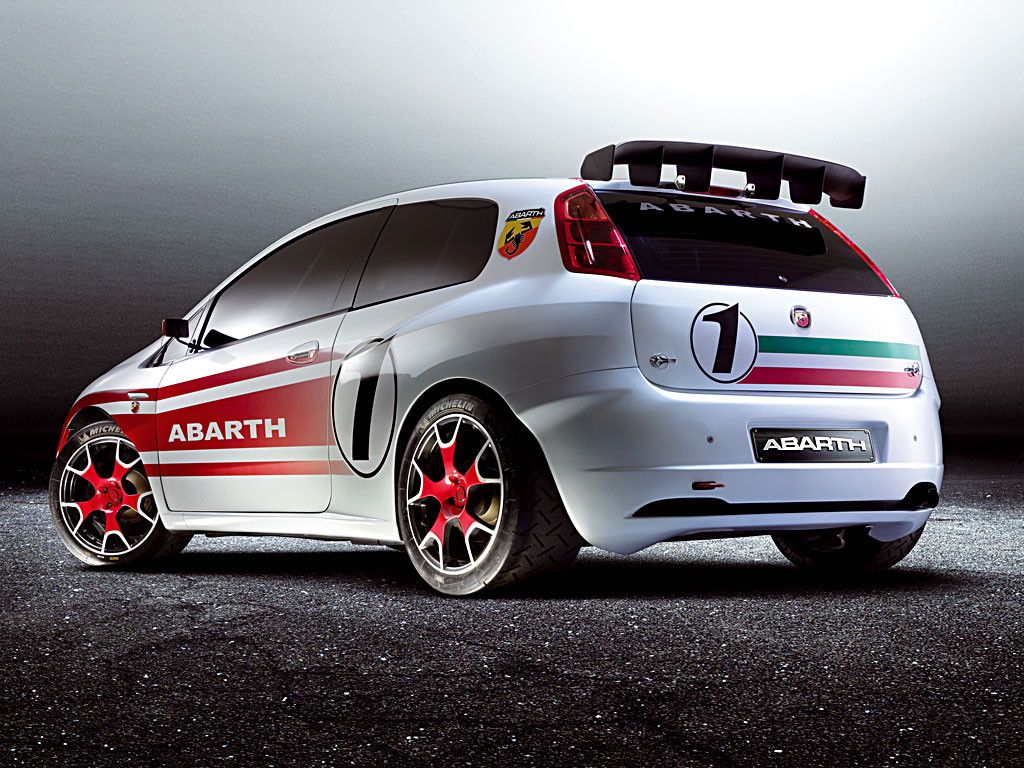
Abarth is an Italian racing car maker founded by Italian-Austrian Karl (Carlo) Abarth in Turin in 1949. In the 1960s, Abarth & C. S.r.l was quite successful in hillclimbing and sports car racing, mainly in classes from 850cc up to 2000cc, competing with Porsche 904 and Ferrari Dino. Hans Herrmann was a factory driver from 1962 until 1965, winning the 500km Nürburgring in 1963 with Teddy Pilette

Later, Johann Abt was promised by Carlo Abarth that he could drive a factory car for free if he won all the races he entered—which Abt nearly did, winning 29 of 30, the 30th being a second. Along with its racing cars, Abarth produced high-performance exhaust pipes. Later, Abarth diversified in producing various tuning kits for road vehicles, mainly for Fiat. Abarth was also associated in producing sports or racing cars with Porsche and Simca.